Measles
Measles is a vaccine preventable, highly contagious viral respiratory disease. Measles, Mumps, Rubella (MMR) vaccination remains the best way to protect against measles.
How to Protect your Family from Measles
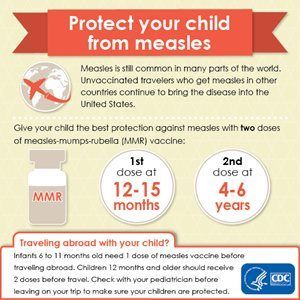
Ensure your child is vaccinated against measles. Below are the guildelines for vaccination.
Routine Measles, Mumps, ad Rubella Vaccination:
- 12 thorugh 15 months: 1st dose of MMR (Measles, Mumps, and Rubella) vaccine
- 4 through 6 years of age: 2nd dose of MMR (Measles, Mumps, and Rubella) vaccine
Special Populations Measles, Mumps, and Rubella Vaccination Recommendation:
International travel - specifically to areas with measles outbreak
- An early dose of MMR vaccine recommended for infants 6 through 11 months of age (these children will still need the routine series above at 12 through 15 months and 4 through 6 years of age)
- An early dose of MMR vaccine recommended for children 1 year of age or older who received one dose of MMR vaccine after their first birthday should receive a second dose of MMR vaccine at least 28 days from first dose before traveling to area with measles outbreak (See section below regarding outbreak information).
How to Know if There is an Outbreak Where I am Traveling or in my Community?
The Centers for Disease Control and Prevention tracks measles cases and outbreaks and updates information every Thursday.
The Colorado Department of Public Health & Environment updates their website with Colorado exposure locations.
How Measles Spreads and How to Protect your Family
Measles is one of the most contagious viruses. It is easily spread through breathing, coughing, and sneezing. Measles is airborne meaning it can remain in the air and on surfaces for up to 2 hours after the infectd person leaves the area.
The best way to protect your children and family is to ensure everyones MMR (measles, mumps, rubella) vaccine is up to date.
Symptoms of Measles
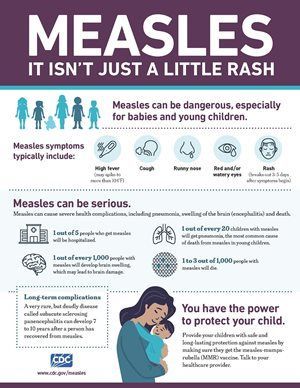
Symptoms measles generally begin 7-14 days after being exposed to the virus. Measles can be dangerous, especially for babies and young children. People are contagious 4 days before the rash and 4 days after the start of the rash.
The first symptoms occur 7-14 days after being exposed and typically include
- High fever
- Cough
- Runny nose
- Eye irritation (redness and watery)
3-5 days after symptoms begin
- Rash - Measles rash usually begins on the face as flat red spots. The rash will spread downward to neck, stomach, arms, legs and feet.
Complications of Measles and Who is at Risk?
Measles infection can cause complications and be serious in all age groups.
Groups at highest risk for measles complications include
- Children under 5
- Adults older than 20
- Pregnant women
- Immunocompromosed individuals
Complications from measles include
- Ear infections
- Diarrhea
- Hospitalization - 1 in 5 unvaccinated individuals who get measles will be hospitalized
- Pneumonia
- Encephalitis (swelling of the brain)
- Death
What to do if you have been exposed or think your child may have measels?
- Everyone in the house should stay at home to not get others sick
- Call the clinic so that we can ask more detailed questions and determine next steps.
Measles Testing
Measles testing is done through the Colorado Department of Public Health - If you think your child may have measles CALL us and we can help determine if testing is necessary.
More Information on Measles:
- Children's Hospital Colorado Charting Pediatrics Podcast: Measles in the Modern World
- CDC
- Colorado Department of Public Health & Environment
Customized from What's Going Around Ar Article v0.1 7/8/2025